

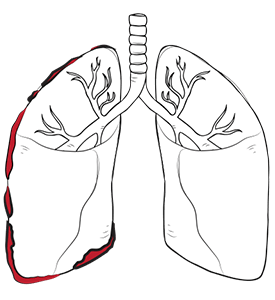
Mesothelioma is usually grouped into four main types based on where it starts in the body. The most common type is pleural mesothelioma, which affects the lining around the lungs. The other three are rarer:
You may also come across the term diffuse malignant mesothelioma. This is not usually treated as a separate main type, but rather a general term for mesothelioma that involves the lining more extensively.
The main cause of mesothelioma is asbestos exposure. Asbestos fibres can be inhaled or swallowed, then remain in the body for many years. Over time, they may cause inflammation and damage that can lead to mesothelioma.
People who work in construction, shipbuilding, brake repair, insulation work, demolition, or renovation have historically faced the highest risk because they are more likely to come into contact with asbestos. Exposure can also happen outside the workplace. Some people are exposed through older buildings or environmental sources, while others come into contact with asbestos fibres carried home on a family member’s clothing.
Other recognised risk factors include previous radiation exposure and, in some cases, inherited genetic susceptibility. Even so, asbestos is still by far the strongest known risk factor. One reason mesothelioma is often diagnosed later in life is that the gap between asbestos exposure and the development of cancer is usually very long, often taking 15 to 40 years or more.

Symptoms of mesothelioma are often vague at first and can look like more common chest conditions. The symptoms of mesothelioma vary depending on where the tumours develop and how far they have spread.
The common signs of mesothelioma include:
As the disease progresses, it may cause worsening shortness of breath, chest discomfort, a dry cough, fatigue, and weight loss. Some patients also notice lumps under the skin on the chest.
Many of these symptoms are caused by thickening of the pleura or by fluid building up around the lung with mesothelioma, known as a pleural effusion. This can make breathing more difficult and may worsen over time. In peritoneal mesothelioma, symptoms may include abdominal pain, swelling, and changes in bowel habits.
One challenge is that these symptoms can resemble those of more common conditions, such as pneumonia, bronchitis, or other lung problems, so a diagnosis is not always straightforward. Imaging may also show pleural plaques, which are areas of scarring linked to past asbestos exposure. These plaques can be a clue that asbestos exposure occurred in the past, and do not necessarily mean cancer on their own. If you have a history of asbestos exposure and develop symptoms such as persistent breathlessness, chest pain, or unexplained weight loss, it is important to seek medical review early.
Mesothelioma diagnosis usually starts with imaging and is confirmed with a biopsy.
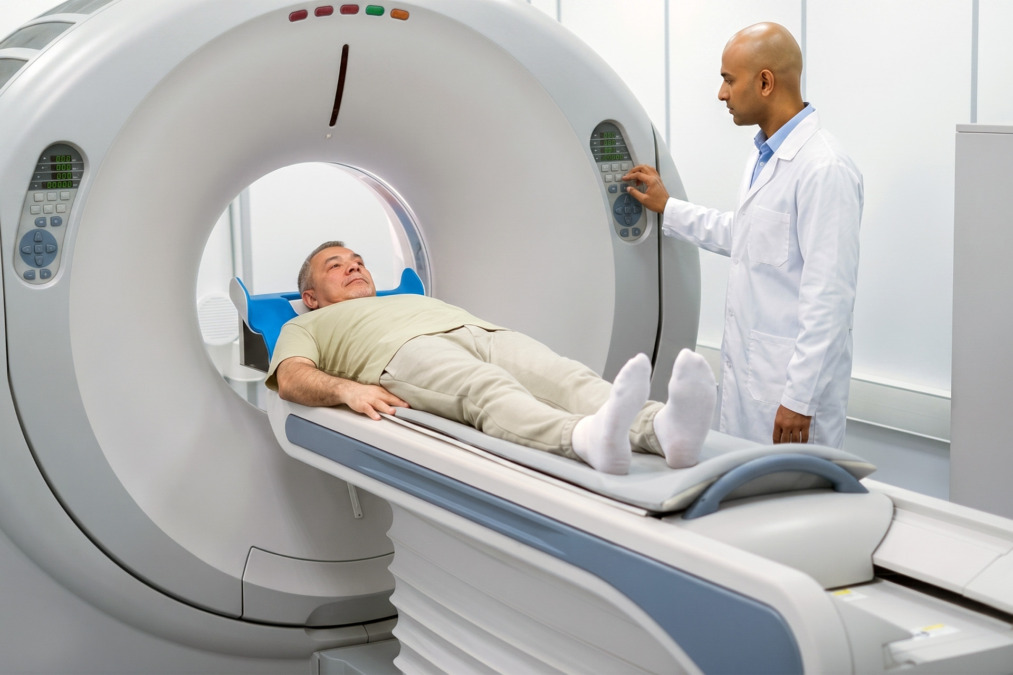
A mesothelioma CT (computed tomography) scan is one of the most important early imaging tests because it can show pleural thickening, nodules, fluid around the lung, or other suspicious changes in the chest and chest wall.
Magnetic resonance imaging (MRI) may also be used, especially when mesothelioma doctors need to define local chest wall invasion or assess lymph node involvement. Pleural fluid analysis of any effusion can sometimes provide early diagnostic clues before a formal biopsy is performed.
A biopsy is the only reliable way to confirm a mesothelioma cancer diagnosis. Fluid or tissue may be taken through a needle, but a surgeon may also obtain a sample during a procedure using a small camera in the chest to examine the pleural surface directly. Once the tissue is examined, the team can confirm whether tumour cells are consistent with mesothelioma, identify the cell type, and plan your treatment.
Mesothelioma stages describe how far the disease has spread and help guide treatment options.
For pleural mesothelioma, the stages of mesothelioma cancer run from Stage 1 to Stage 4. Lower stages mean the tumour is more confined to the pleura. Higher stages mean greater spread into the chest wall, nearby structures, lymph nodes, or distant sites.
Risk factors such as cell type and lymph node involvement also influence staging decisions. In general, early-stage disease may still be suitable for aggressive local treatment, while Stages 2 to 4 are more likely to need systemic therapy, symptom control, or both. Other types of mesothelioma, including peritoneal mesothelioma and pericardial mesothelioma, do not have the same formal staging system as pleural disease.
When people ask about mesothelioma life expectancy, the stage of the cancer is one of the most important determinants. According to the American Cancer Society estimates, 5-year relative survival rates for pleural mesothelioma are 23% for localised disease, 15% for regional disease, and 11% for distant disease.
These figures are useful for context, but they cannot predict exactly what will happen to any one person. Mesothelioma prognosis also depends on cell type, overall health, treatment response, and whether multimodal cancer treatment is possible. A mesothelioma treated with a combination approach tends to have better treatment outcomes than one managed with a single modality.
Mesothelioma treatment options often rely on non-surgical therapies because many mesothelioma patients are diagnosed when surgery alone is not enough.
There is no dependable mesothelioma cure for most mesothelioma patients, but cancer treatment can reduce symptoms, slow the growth of cancer cells, and sometimes meaningfully extend survival. These therapies work by attacking cancer cells directly or by activating the immune system to recognise and kill cancer cells more effectively.
For malignant pleural mesothelioma treatment, chemotherapy, immunotherapy, radiation therapy, targeted therapies, and palliative care all can play a role.
Targeted therapies and targeted radiation therapy are used in selected mesothelioma patients, and clinical trials continue to evaluate new methods of treating mesothelioma. Clinical trials at specialist cancer centres have advanced treatment options for both pleural and peritoneal mesothelioma.
Treating mesothelioma alongside other cancers that may have been diagnosed concurrently requires careful coordination of cancer treatment among the whole team.
Non-surgical care also includes symptom-directed treatment. If fluid keeps building up around the lung, drainage procedures or pleurodesis may help with breathing. Radiation therapy may relieve symptoms and improve the quality of life. Palliative care is not just for the end of life. It is part of good mesothelioma care and can help with pain, breathlessness, fatigue, and decision-making throughout cancer treatment.
Mesothelioma surgery is considered for selected mesothelioma patients, usually when the disease is at an earlier stage, and the person is fit enough for a major operation. Surgery aims either to remove as much visible cancer as possible or to relieve symptoms from the tumour bulk or trapped lung.
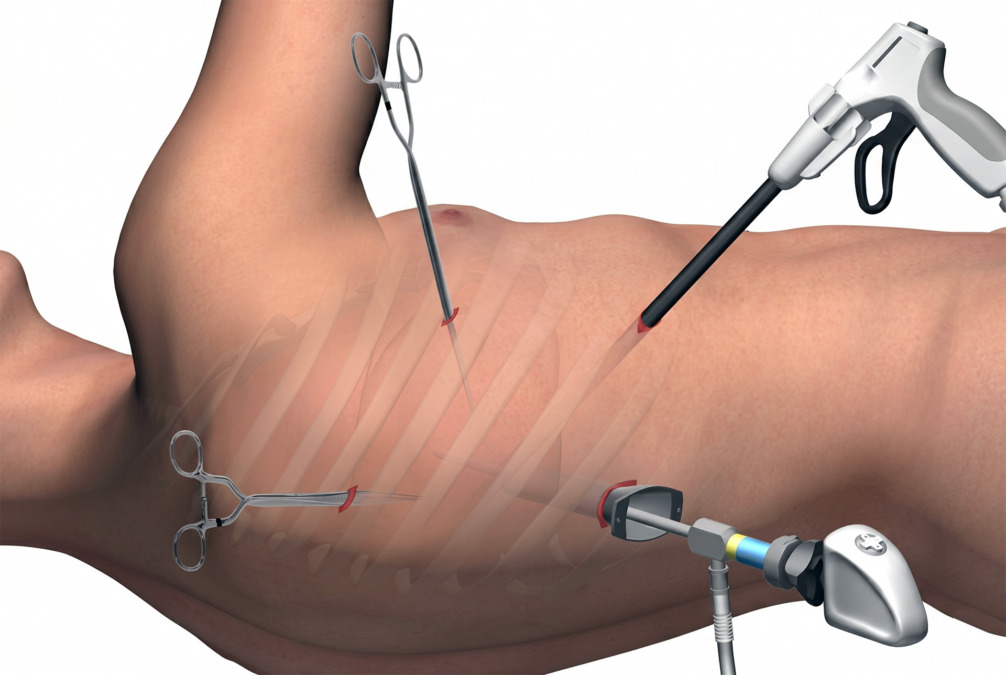
Diagnostic and palliative procedures may also be performed using minimally invasive approaches, such as Video-Assisted Thoracoscopic Surgery (VATS), Robot-Assisted Thoracic Surgery (RATS), or Uniportal VATS (U-VATS).
The main operations for pleural mesothelioma are pleurectomy and decortication, which remove the pleural tumour along the chest wall while preserving the lung, and extrapleural pneumonectomy, which removes the lung along with the adjacent diseased chest wall lining and selected nearby tissue.
Minimally invasive resection, including VATS pleurectomy and decortication, has been explored in selected patients, but more extensive mesothelioma surgery often still requires an open approach to achieve safe and complete tumour removal. RATS may also have a role in selected thoracic cases, but suitability depends on tumour extent and operative goals rather than on the technology alone.
At Neumark Lung & Chest Surgery Centre, mesothelioma surgery is usually considered within multimodal care that may include chemotherapy, immunotherapy and radiation therapy before or after the operation.
Treating mesothelioma effectively at this level often requires the combined expertise of cancer centres with experience in thoracic surgical oncology and clinical oncology. Neumark’s broader thoracic practice includes minimally invasive techniques such as VATS, U-VATS and RATS, which may be used in selected cases where they are appropriate to the stage of disease and the aims of treatment.
Recovery after mesothelioma treatment depends on the stage of disease, the treatment used, and the patient.
Operations for pleural mesothelioma involving the chest wall are major procedures, so recovery can involve pain control, breathing exercises, chest drains, rehabilitation, and close follow-ups. Chemotherapy, immunotherapy and radiation therapy also have side effects that require monitoring. Follow-up imaging tests are also important because scans are often repeated to assess treatment response and detect recurrence.
Even when the disease cannot be completely removed, cancer treatment may still improve the quality of life. That is especially true when mesothelioma symptoms are caused by pleural effusion, chest pain, or pressure effects within the chest and chest wall. Good recovery planning includes both cancer treatment and supportive care.
Neumark Lung & Chest Surgery Centre can help by providing mesothelioma patients with a clear opinion on thoracic surgery as part of a broader multidisciplinary plan.
We specialise in minimally invasive thoracic surgery with a multidisciplinary approach, led by Dr Harish Mithiran, senior consultant thoracic surgeon at Gleneagles and Mount Alvernia hospitals. For mesothelioma patients with pleural mesothelioma, this means a careful review of imaging tests, assessment of operability, coordination with clinical oncology and medical oncologists when systemic therapy is needed, and guidance on when surgery is likely to help and when it is not.
If you have persistent chest symptoms, pleural thickening, unexplained pleural effusion, or a history of asbestos exposure, contact Neumark for a consultation. Early review by an experienced chest specialist can clarify the diagnosis, explain your treatment options, and help you move towards the most appropriate mesothelioma treatment plan.