A Spot on Your Lung.
Probably
Nothing.
Let's Make Sure.
Finding a spot on your lung is an unexpected and deeply unsettling moment, yet
it is reassuring to note that the vast majority are entirely non-cancerous.
Your
immediate priority is securing an expert, professional review to evaluate your scan data and
establish an exact care plan. Dr Harish Mithiran and the Neumark care team provide prompt,
same-week diagnostic appointments across our hospital locations.
Lung Nodule Management
- Vast majority of lung nodules are benign (non-cancerous)
- Prompt specialist evaluation & diagnostic clarity
- Low-dose CT scan or targeted biopsy if required
- Holistic, patient-centred multidisciplinary care
- No GP referral needed for appointments
- Gleneagles or Mount Alvernia Hospital
Clinical Results & What to Expect
Learn about the expected outcomes, recovery, and important information to help you understand your treatment options.
Entirely Benign
Around 95% of all lung nodules evaluated are completely non-cancerous, often turning out to be simple scars from past, fully healed chest infections.
Nodule Size
By medical definition, a nodule is any spot under 3cm. Anything larger is classified as a mass.
Early Detection
In the small percentage where a nodule does show early changes, catching it at Stage I means the clinical survival rate exceeds 97%.
Rapid Review
We maintain immediate, same-week consultation paths at both Gleneagles and Mount Alvernia Hospital locations to save you from long periods of waiting and worry.
Early assessment is a critical preventative step. Book your review today →
Understanding Lung Nodules
A pulmonary nodule refers to a small, isolated round or oval opacity within the lung tissue measuring less than 3cm. These spots are frequently discovered incidentally during diagnostic imaging, such as standard chest X-rays or routine CT scans ordered for unrelated clinical indications.
A high percentage of these lesions represent residual scar tissue resulting from historical, fully healed respiratory infections or focal inflammatory changes. Nonetheless, because a small subset of non-calcified nodules can serve as early presentations of primary lung malignancies, expert risk assessment is universally indicated.
Reducing the Risk of Lung Cancer Some lung nodules may develop into cancer over time. Identifying and treating suspicious nodules early is similar to a colonoscopy, where precancerous polyps are found and removed before they have the chance to become cancer.
A Clear Plan After Your Nodule Review: After a formal nodule review, most patients leave with a clear plan for what happens next. Depending on what the scan shows, that might mean regular low-dose CT scans to monitor the nodule over time, a biopsy to check it directly, or — if it looks clearly benign — reassurance that no further action is needed.

Advanced Diagnostics: Low-Dose CT (LDCT) Scanning
Our monitoring programmes utilise standard low-dose CT scans. These advanced imaging systems deliver high-resolution images while using up to 90% less radiation than a standard diagnostic CT scan—making it an exceptionally safe method for long-term monitoring.
Quick and Convenient: The scan requires only around 5 minutes from the time you arrive at the facility.
Solid Nodule
Clear, firm spots on a scan. They are incredibly common.
Part-Solid Nodule
Spots that look slightly hazy with a denser centre.
Ground-Glass Nodule
Faint, semi-transparent misty patches on a scan.
Calcified Nodule
Spots that show up bright and clear because of calcium deposits. This is a definitive sign of an old, inactive scar from a past infection.
Am I a Candidate for Lung Nodule Review?
A specialist review looks at everything that matters — the nodule's size, its shape, and how it compares to your previous scans — to work out whether it needs monitoring, further tests, or nothing at all.
- ✓ An unexpected white spot or nodule was found incidentally on a chest X-ray or CT scan
- ✓ You have a family history of lung conditions
- ✓ You want a clear care plan for a lung nodule
- ✓ Past history of respiratory conditions (such as tuberculosis) which may leave calcified tissue scars
- ✓ You have been advised to undergo active CT surveillance and want a definitive second surgical opinion
What Does the Size of Your Lung Nodule Mean?
While the size of a nodule is an important guide, Dr Harish looks at multiple key features to get a complete picture, including its shape, edge patterns, density variations, and your overall medical history.
| Nodule Size | Typical Category | What It Means For You | Risk Profile |
|---|---|---|---|
| Under 6mm | Tiny Lung Nodule | These micro-spots are exceptionally small and carry a very low risk. For most patients, they require absolutely no treatment and are managed with a straightforward monitoring scan or complete discharge. | Low Risk |
| 6–8mm | Small Lung Nodule | These are still very small. To ensure total safety, a routine low-dose follow-up scan is typically scheduled in 3 to 6 months to check that the spot is perfectly stable and has not changed. | Low to Moderate |
| 8–20mm | Intermediate Nodule | Spots of this size sit in a middle category. Dr Harish will look closely at its appearance and he may recommend and additional PET-CT scan, a biopsy or surgery. | Moderate Risk |
| Over 20mm (2cm) | Larger Spot / Nodule | Larger spots require a deliberate, careful assessment. Dr Harish will thoroughly evaluate the nodule and will likely recommend a biopsy or a minimally invasive keyhole surgery to get definitive, accurate answers quickly. | Requires Specialist Review |
Why Lung Nodule Monitoring is Unique in Singapore
In Western countries, lung checks are almost exclusively discussed for heavy smokers. However, medical data across Singapore and East Asia shows a very different reality: nearly half of all lung conditions occur in individuals who have never smoked, particularly women.This means finding an incidental white spot on a scan is remarkably common in Singapore, even for non-smokers. Most of these turn out to be harmless signatures of past, fully healed chest inflammation or environmental exposure.
Because our local risk profiles are unique, having a dedicated specialist evaluate your specific history and background is the safest, most logical step to protect your long-term health.
This protective approach is aligned with the latest clinical guidelines published by the Academy of Medicine Singapore (January 2025).
The size of your lung nodule is assessed using internationally recognised guidelines from the Fleischner Society and the British Thoracic Society. Your follow-up and treatment plan will then be tailored to your scan findings, medical history, and individual risk factors.
Your 4-Step Path to Clear Answers
We provide a highly coordinated, rapid evaluation process to replace worry with complete clarity. Most reviews are completed within the same week.
Share Your Records
Reach out to our care team directly via phone or WhatsApp (+65 9726 2485). Simply share your existing chest X-ray or CT scan image files and written radiology reports with us before your appointment.
Expert Scan Review
During your consultation, Dr Harish will personally review the scans with you, explaining exactly what the spot looks like in plain language.
Clear Risk Evaluation
We map the spot's unique features, such as its exact size, shape, and density, against trusted international medical guidelines. This allows us to accurately sort the nodule into a clear safety category.
Your Actionable Roadmap
You leave your very first appointment with a definitive, custom plan, whether that means a routine low-dose monitoring schedule to track stability over time, or a complete clinical discharge.

Most Lung Nodules Turn Out to Be Completely Harmless
The vast majority of people who come into our clinic for an unexpected lung spot review leave with profound reassurance. Discovering that your spot is simply an old, inactive scar from a past chest issue takes a massive weight off your shoulders.
In the small percentage of cases where a spot does look suspicious, catching it early is the single greatest medical advantage you can have. Identifying a nodule at an early stage allows us to use advanced, lung-preserving keyhole techniques to address it completely—long before any physical symptoms ever appear.
"Finding a lung nodule can be worrying. Our priority is to explain what it means, assess your individual risk, and recommend the most appropriate follow-up or treatment plan, so you know what to expect at every stage."
Lung Nodule Management: Frequently Asked Questions
No. The vast majority—about 95%—of all lung nodules found on scans are completely benign (non-cancerous). They are remarkably common and usually turn out to be tiny, harmless scars left behind by a past chest infection, a resolved bout of pneumonia, or localised inflammation. Even though the statistics are heavily in your favour, having a thoracic specialist evaluate the scan is the safest way to confirm these low-risk features and give you complete peace of mind.
Size is only one factor. Generally, tiny nodules under 6mm are considered very low-risk and typically require nothing more than a routine monitoring scan. Spots between 6mm and 8mm fall into an intermediate category, where a structured monitoring plan is used to keep a close eye on them. Nodules larger than 8mm are evaluated more carefully and may require further analysis. When determining risk, Dr Harish looks at the whole picture: including the nodule's shape, internal density, edge patterns, and how it behaves over time.
During your consultation, Dr Harish will review your scan with you and explain the findings in clear, easy-to-understand language. For many patients, immediate treatment is not required. Instead, the next step is careful monitoring based on the size and appearance of the nodule, together with your medical history and individual risk factors. If follow-up is recommended, a low-dose CT scan may be arranged after an appropriate interval to check whether the nodule has remained stable or changed over time.
Yes, if it helps you feel more secure. Active surveillance (watchful waiting) is the standard international approach for low-risk or stable nodules. However, waiting for a follow-up scan can sometimes cause underlying anxiety. If you want an expert second look, or simply need a clear translation of your radiology report, a review with Dr Harish is entirely appropriate. Please bring along your previous image records so we can perform a direct, side-by-side comparison.
Most likely not. The vast majority of incidental lung spots never require a biopsy. A biopsy is strictly reserved for intermediate or higher-risk nodules where we need definitive confirmation of the cell types. The procedure is performed under real-time, low-dose imaging to guide a fine needle safely and accurately. If this step is ever necessary, our team will explain the entire process clearly so you know exactly what to expect.
No. You do not need a referral letter from a GP to book an appointment with us; you can contact our clinic directly. However, if you plan to use private medical insurance or an Integrated Shield Plan to cover the costs of your consultation or tracking scans, your insurer may request a GP referral as part of their standard claims process. Our care team will happily help you check these requirements.
Most white spots on the lungs are simply harmless marks or tiny scars left behind from the past. They are very often just the footprints of a previous, completely healed chest infection, an old bout of mild pneumonia, or a temporary patch of localised inflammation where your body naturally fought off an environmental irritant. Because a very small percentage can show early cellular changes, an expert specialist review is always the safest approach to ensure your health is protected.
Schedule Your Consultation: Gain Clarity This Week
Taking the first step to have your lung scan reviewed by a specialist replaces guessing with clear, definitive facts. The vast majority of our patients experience complete peace of mind right after their initial evaluation.
- Same-week priority appointments are always open to minimise your waiting time and worry.
- Direct expert analysis: Dr Harish personally reviews your original, raw scan records with you.
- Direct clinic access: You do not need a referral letter from a GP to book a consultation with us.
- A clear, supportive roadmap is mapped out during your very first visit so you know exactly what to expect.
- Seamless integration with our low-dose CT (LDCT) monitoring programmes.
- Conveniently located specialist centres at both Gleneagles Hospital and Mount Alvernia Hospital.
Call or WhatsApp directly
+65 6908 2145 Mon–Fri 9am–5:30pm · Sat 9am–12:30pm info@neumarksurgery.comBook Your Nodule Review
Two premier hospitals
No waiting lists
Modern surgical practice
Minimally invasive small incisions
Two Fully Accredited Hospital Centres
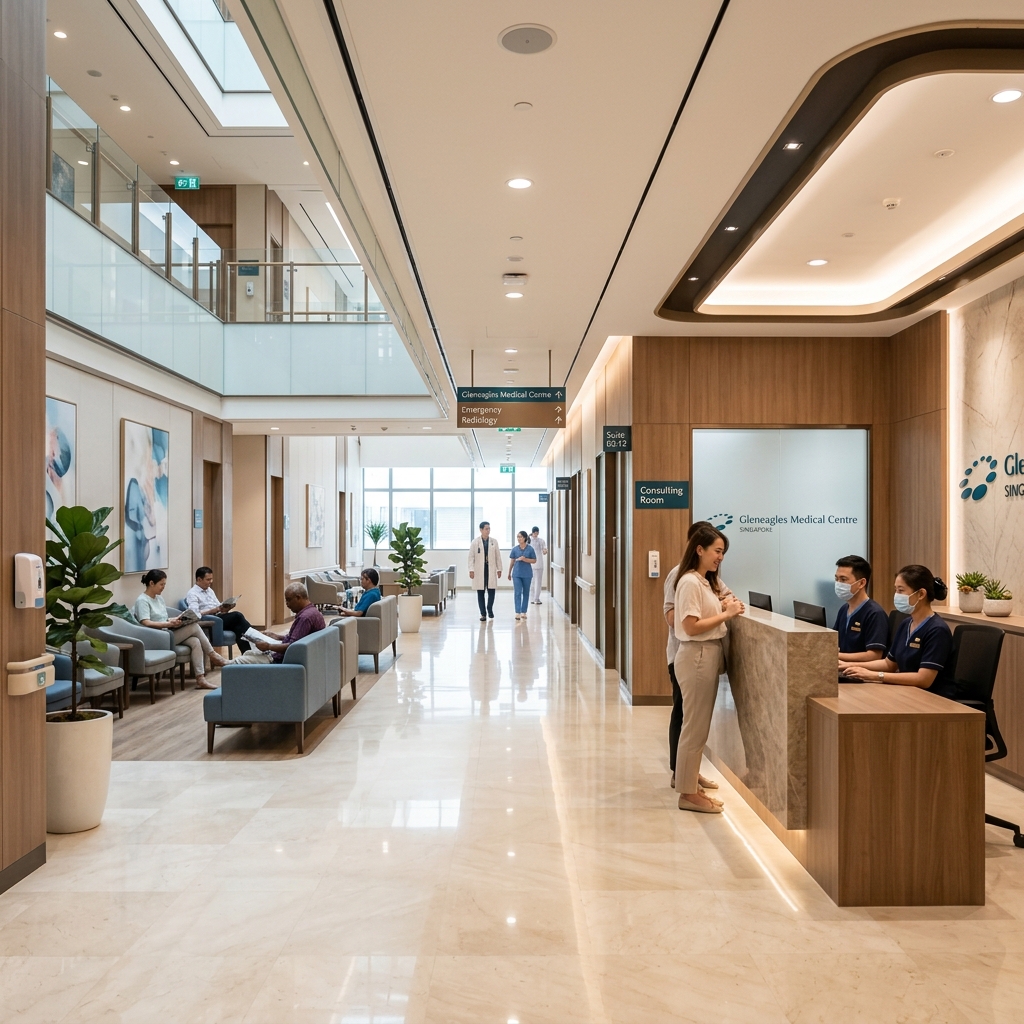
Gleneagles Hospital
- Gleneagles Hospital Medical Centre
6 Napier Road #02-09, Singapore 258499 - Central Medical Intake Coordination. Clinic Hotline: +65 6908 2145
- Dedicated parking facilities available on site
- Mon–Fri 9am–5:30pm · Sat 9am–12:30pm

Mount Alvernia Hospital
- Mount Alvernia Hospital
820 Thomson Road, Medical Centre A #06-07, Singapore 574623 - North Medical Intake Coordination. Clinic Hotline: +65 6908 2145
- Dedicated parking facilities available on site
- Mon–Fri 9am–5:30pm · Sat 9am–12:30pm