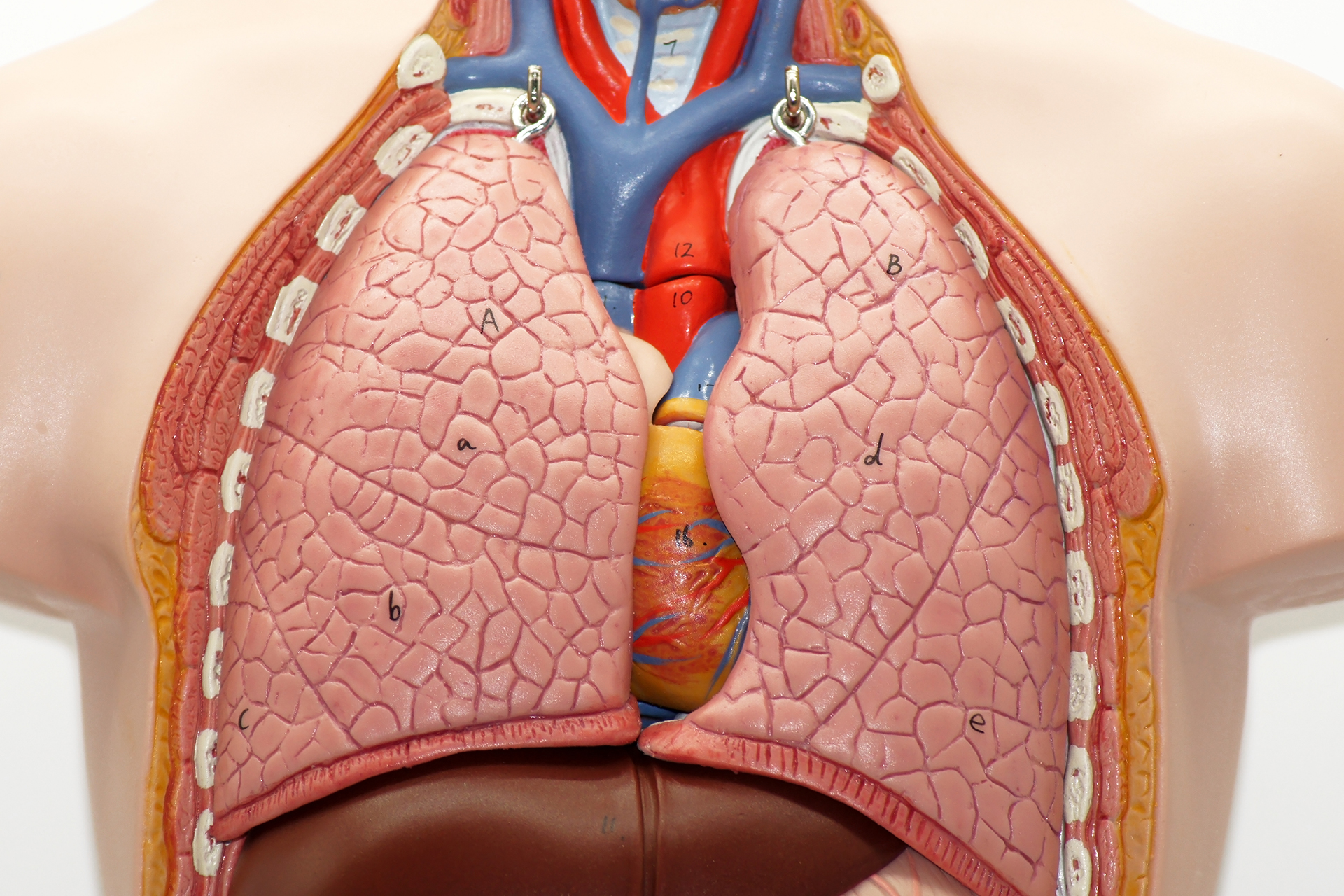

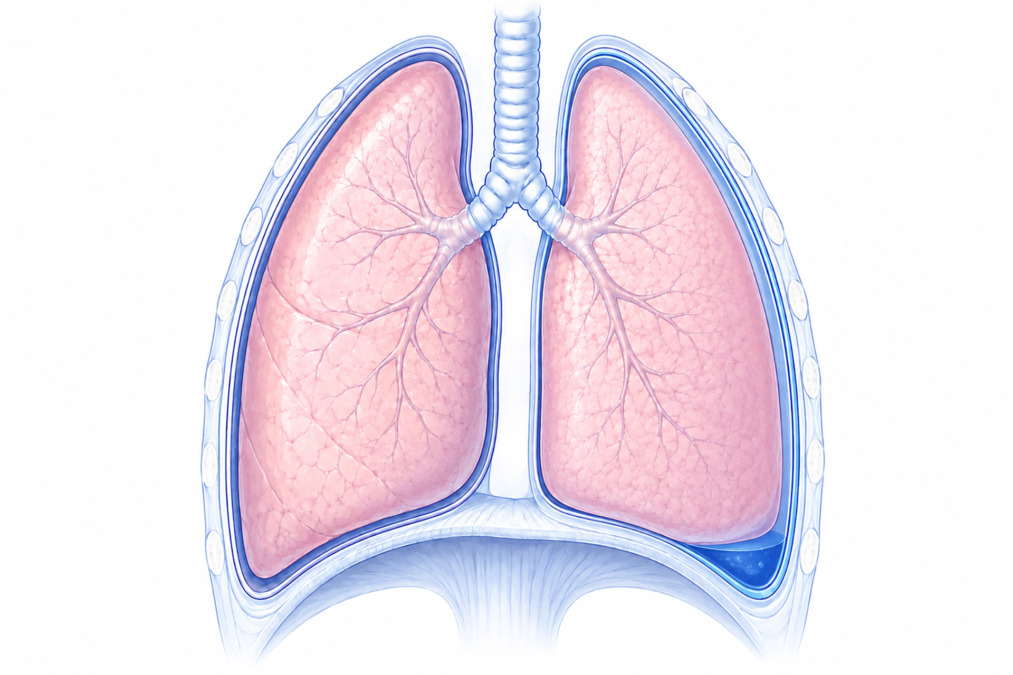
The pleural cavity is the small gap between the visceral pleura covering the lung and the lining of the chest wall. If fluid builds up there, it can press on the lung and cause breathlessness. Draining the fluid may relieve symptoms, but further management may be needed if it keeps returning.
Talc pleurodesis is a procedure that uses sterile talc to seal the pleural space and prevent fluid from building up around the lung. It induces controlled inflammation, causing the lung lining to adhere to the chest wall and the method is most often used to treat recurrent malignant pleural effusion.
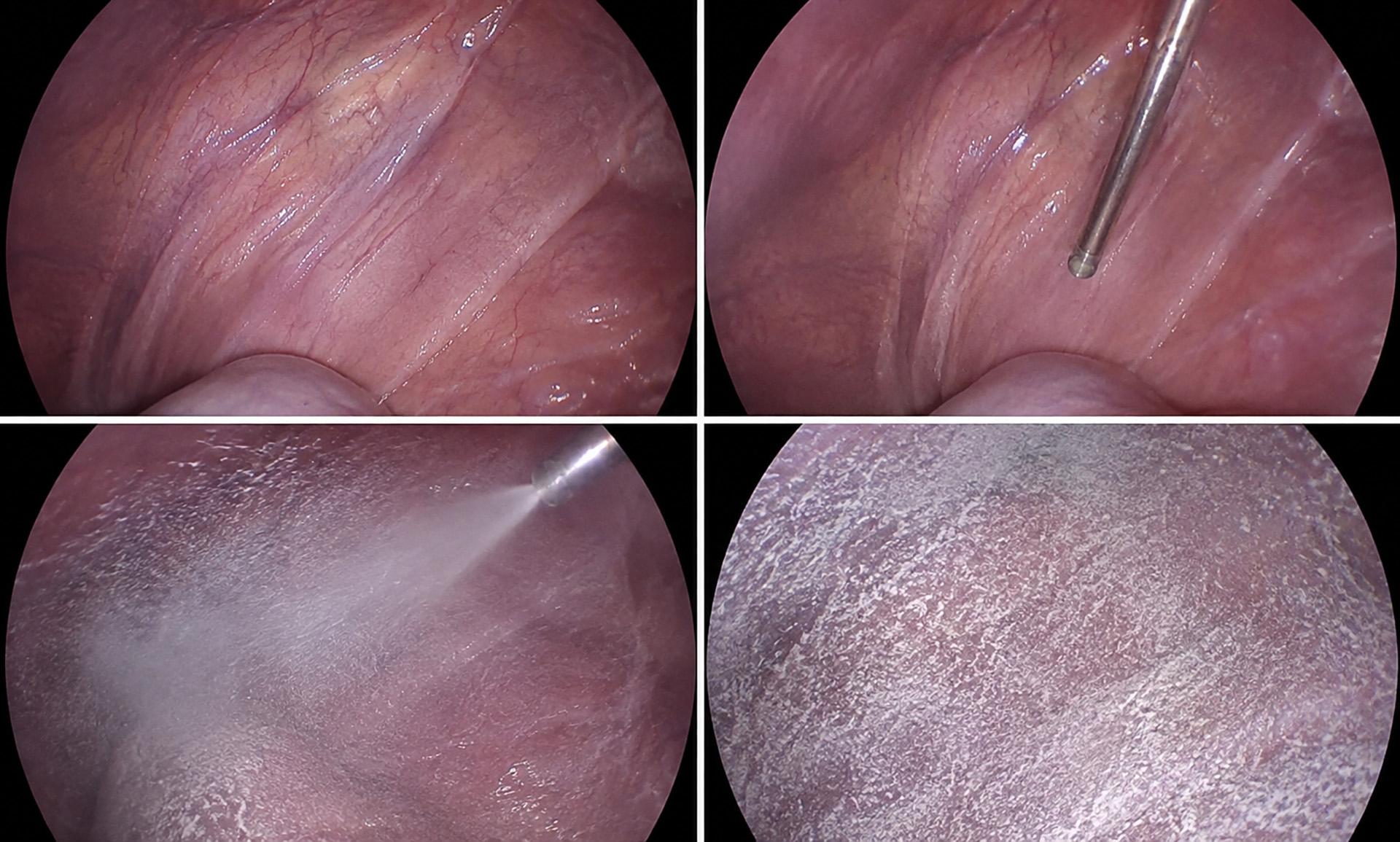
Talc pleurodesis uses sterile, purified medical talc, which differs from cosmetic talcum powder. It may be given as a liquid through a chest tube or sprayed into the pleural space during thoracoscopy. This seals the pleural space so fluid is less likely to return, allowing the lung to expand, helping to relieve breathlessness.
Talc pleurodesis, or talc slurry sclerosis, is a chemical method to control recurrent malignant pleural effusion, a cancer-related fluid buildup around the lungs. It can cause breathlessness, coughing and reduced stamina, and often returns after drainage. Common cancers that cause malignant pleural effusions include lung cancer, breast cancer and malignant mesothelioma. A malignant effusion from an underlying disease or malignancy often signals advanced disease and a poor prognosis, so treatment focuses on symptom relief and quality of life.
Talc pleurodesis may help prevent the fluid from recurring. Procedure suitability depends on the patient’s health and whether the lung can fully expand. Candidates for chemical pleurodesis must have expandable lungs and recurrent symptoms expected to persist.
Alternatives to talc pleurodesis are an indwelling pleural catheter, a thin tube that stays in the chest and allows the fluid to be drained at home, or mechanical pleurodesis, which uses a mechanical abrasion to roughen the pleural surface so the pleura heals together. In some patients, a pleural catheter and pleurodesis may be combined.
The talc pleurodesis procedure can be performed by a talc slurry through a chest tube or by talc poudrage during a thoracoscopy. Each procedure seals the pleura, and the procedure is chosen to fit the patient.
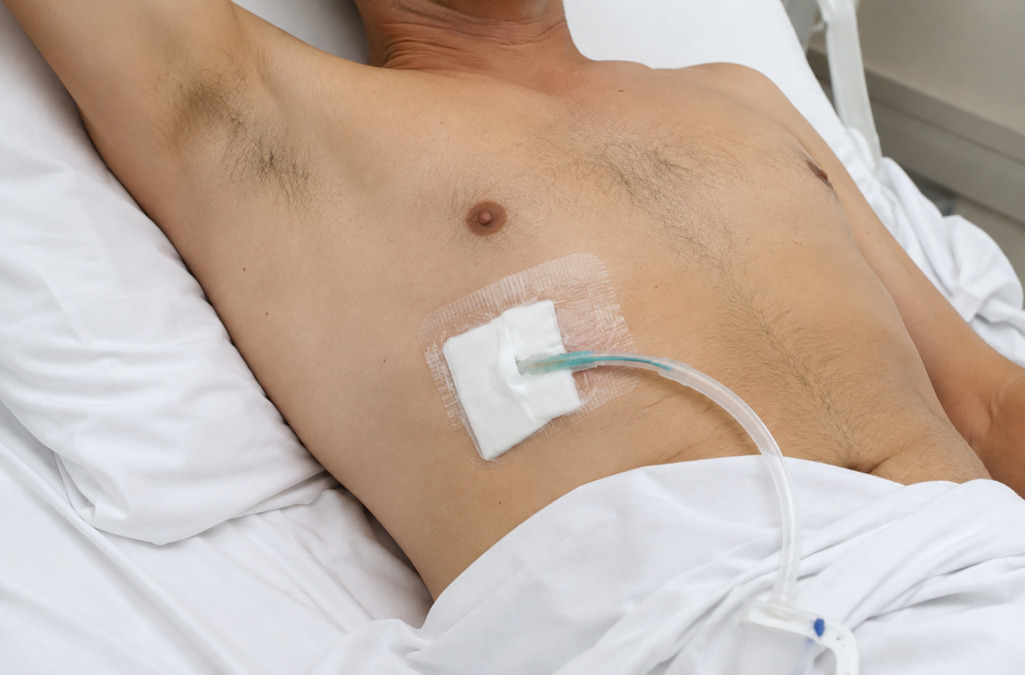
For talc slurry pleurodesis, a chest tube is inserted under local anaesthesia to drain the fluid and allow the lung to re-expand. Medical talc mixed with saline is then delivered through the tube to seal the pleural space. This bedside procedure avoids surgery and may sometimes use a smaller pleural catheter, but the tube remains temporarily for further drainage.
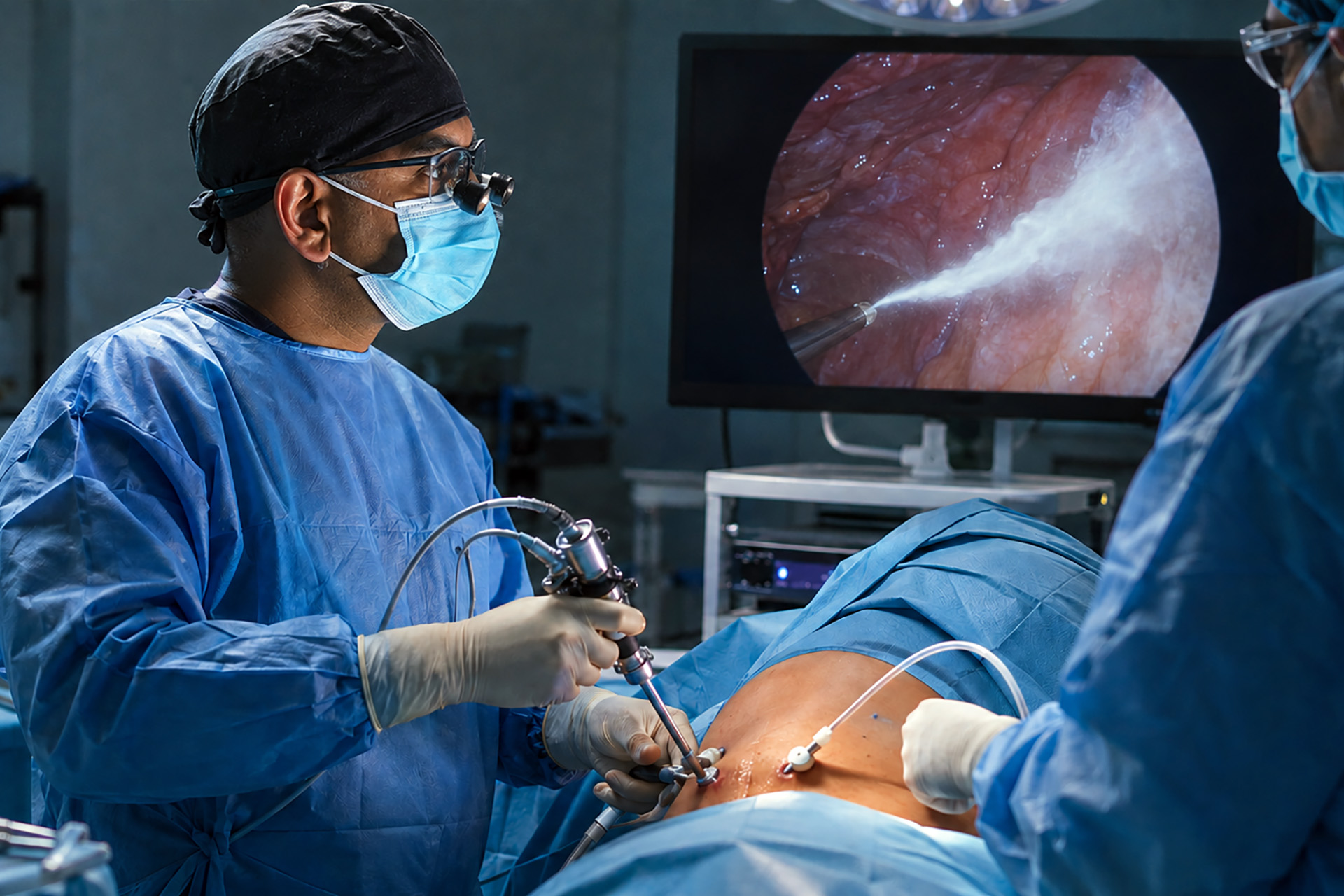
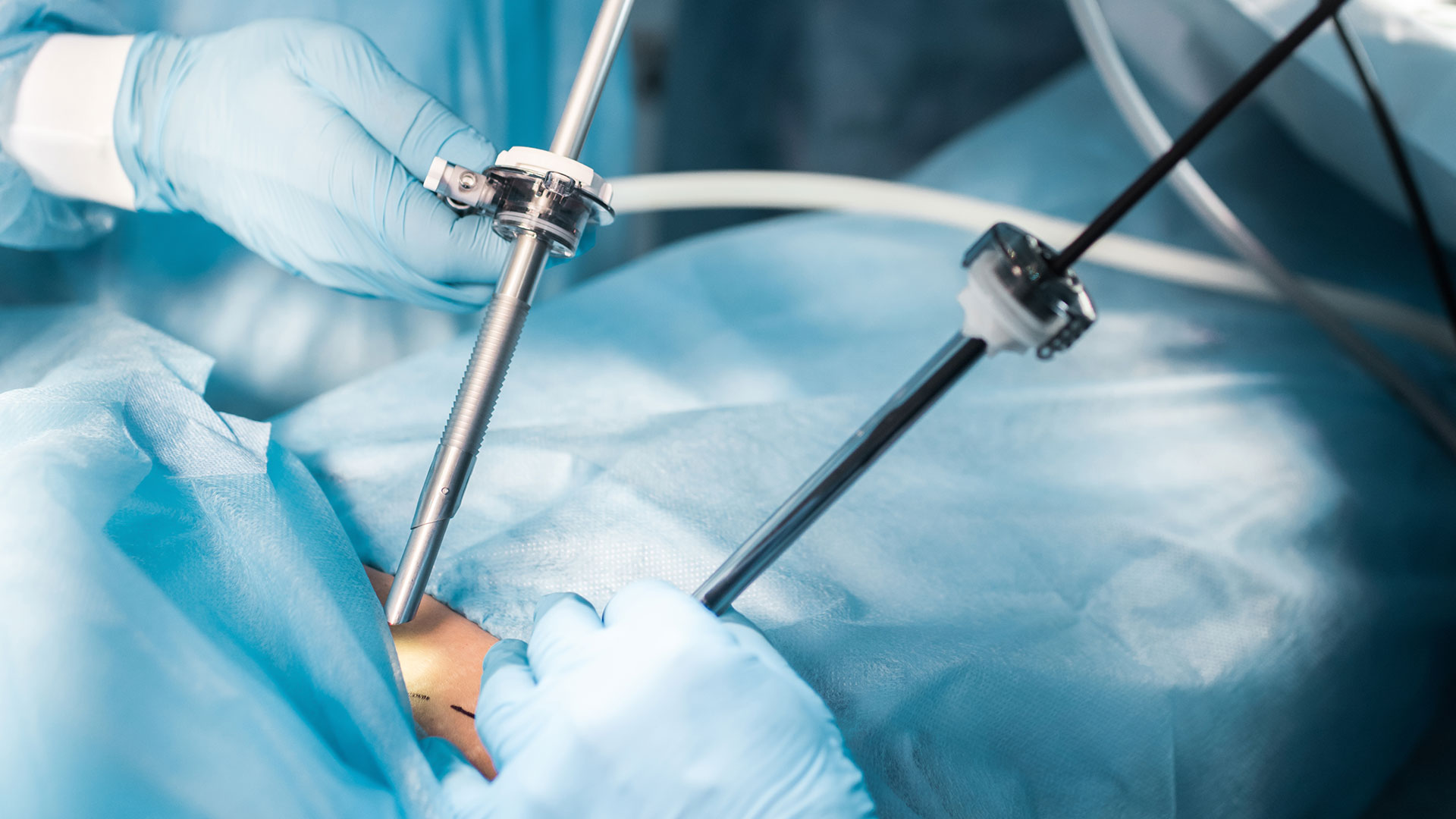
During a thoracoscopic talc poudrage, medical talc is sprayed evenly over the pleural surfaces under direct camera view. Video-Assisted Thoracoscopic Surgery (VATS) pleurodesis usually takes place under general anaesthesia in an operating theatre, whereas a medical thoracoscopy may be performed under local anaesthesia with sedation. A medical thoracoscopy allows the pleura to be examined and biopsied simultaneously.
After a talc pleurodesis, the chest tube remains in place until the drainage decreases and the lung remains expanded. The team monitors the recovery in the hospital. If the pleural space does not seal, the procedure may be repeated, or another option may be considered.
Recovery depends on the underlying condition and general health. Follow-up chest X-rays check that the lung remains expanded and fluid has not returned. Breathing may become easier once the effusion is controlled.
Most complications of talc pleurodesis are temporary, although serious problems can occur.
Talc pleurodesis has minimal side effects that may include:
Less common problems include:
Rarely, increased risk from talc may cause serious lung inflammation and breathing difficulties. Using sterile, graded talc powder with larger particles reduces this risk.
The team monitors lung expansion, air leakage and drainage during recovery. If pleurodesis fails, an indwelling pleural catheter or another procedure may be considered.
Talc pleurodesis and the indwelling pleural catheter are the main treatments for patients with malignant pleural effusion.
The choice depends on the patient’s prognosis, whether the lung expands, and the patient’s personal preference.
Talc pleurodesis is an effective way to control a recurrent malignant pleural effusion and improve breathlessness in selected patients.
Neumark Lung & Chest Surgery Centre specialises in minimally invasive thoracic surgery with a multidisciplinary approach led by Dr Harish Mithiran, senior consultant thoracic surgeon at Gleneagles and Mount Alvernia hospitals. Our lung specialists can advise whether talc pleurodesis, a pleural catheter or another treatment is most suitable. The potential benefits of early treatment include relieving dyspnea, reducing hospital visits, and improving the patient’s quality of life. Contact Neumark for a consultation today.
Talc pleurodesis can cause chest discomfort because inflammation is part of its mechanism of action. Pain medicine and local anaesthetic are given before talc pleurodesis, with further relief afterwards. Report severe or increasing pain.
Talc pleurodesis can sometimes be repeated after an unsuccessful first attempt. The team checks for a trapped lung, air leakage, infection, or another cause of failure. A catheter or surgery may be more appropriate.
Talc pleurodesis controls where cancer-related fluid collects but does not cure the cancer. It aims to relieve symptoms and reduce recurrence while, when appropriate, continuing oncology treatment.
A chest drain commonly stays in place for one or two days after a talc slurry, and sometimes longer. Removal depends on lung expansion, fluid volume, air leakage and overall health, not a fixed timetable.
DISCLAIMER: The information provided on this website is for general informational purposes only and is not intended as a substitute for professional medical advice, diagnosis, or treatment. The use of this website does not create a doctor-patient relationship and no medical advice should be inferred or assumed. It is the user’s sole responsibility to seek the advice of their healthcare professionals for any medical concerns they may have and the user should not disregard, or delay, prompt medical advice for any such condition.
Read our latest insights on lung diseases and chest conditions, including prevention tactics, treatments, and more.
Gleneagles Medical Centre
6 Napier Road
#02-09 Gleneagles Medical Centre
Singapore 258499
Mount Alvernia Hospital
820 Thomson Road
#06-07 Medical Centre A
Singapore 574623